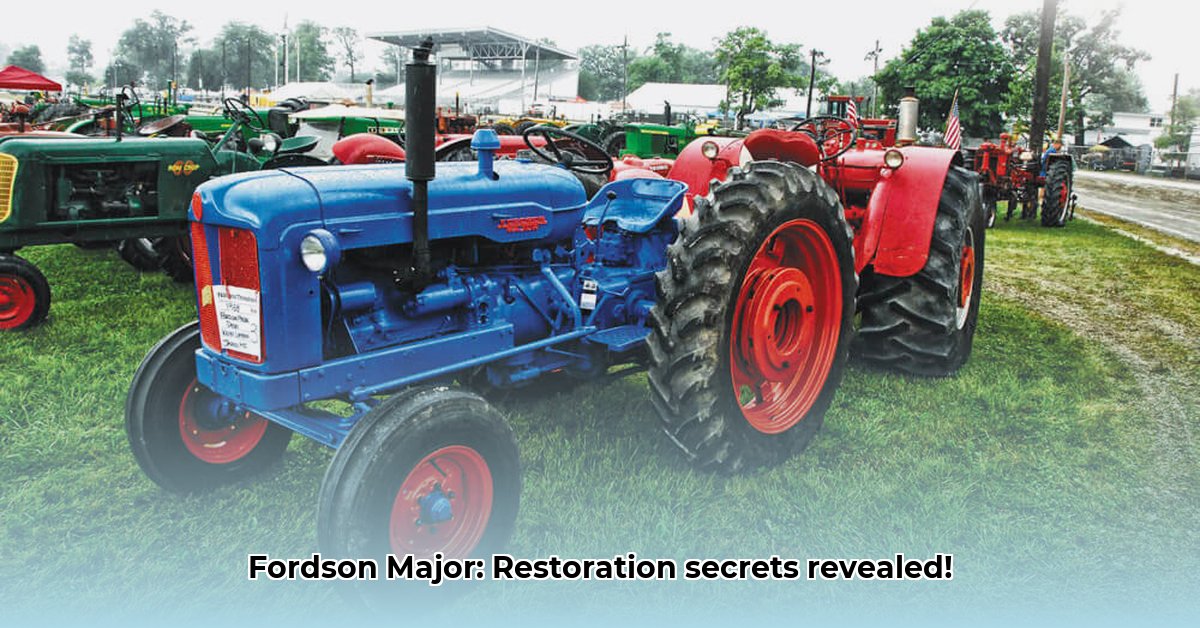
Understanding the Fordson Major Tractor
The Fordson Major tractor, a stalwart of mid-20th-century agriculture, retains its popularity among collectors and enthusiasts. This guide explores its historical significance, market value, restoration challenges, and provides actionable insights for various stakeholders. Its robust build and reliable performance cemented its place in history, but owning one requires understanding its nuances and the unique challenges of maintaining this classic machine. For detailed pricing information, check out this tractor price guide.
Technical Specifications: A Deep Dive into the Fordson Major
Understanding the technical details is vital, whether you're buying, restoring, or simply appreciating its engineering. While specifications varied slightly by year and model, key features generally include a powerful engine (typically 40-50 horsepower), a reliable four-speed transmission offering versatile gearing, and a straightforward (for its time) hydraulic system. Detailed specifications for individual models are readily available online; searching by model number provides precise figures crucial for repairs and maintenance. What are some key features that distinguish a Fordson Major from other tractors of its era?
Market Value: Navigating the Fordson Major Market
Pricing a Fordson Major isn't straightforward. Online marketplaces and auctions reveal a wide range—from a few thousand dollars for projects needing significant work to tens of thousands for meticulously restored examples. Condition is paramount; a well-maintained, original tractor commands a significantly higher price than one needing extensive repair. Beyond condition, rarity of specific models, originality of parts, and overall mechanical soundness influence value. Before buying or selling, compare prices of similar tractors in comparable condition, accounting for needed repairs. How can collectors ensure they’re getting a fair price for their Fordson Major?
Restoration Challenges and Solutions: Bringing a Fordson Major Back to Life
Restoring a Fordson Major is rewarding but challenging. Parts sourcing can be difficult; original parts often require extensive searching through online forums, specialty suppliers, and may even necessitate custom fabrication. Common problems include engine issues (especially in older gasoline models), significant rust, and failing hydraulics. Despite these hurdles, successful restorations demonstrate that patience, persistence, and mechanical knowledge yield excellent results. What are the most common parts that require replacement during a Fordson Major restoration?
Restoring Your Fordson Major: A Step-by-Step Guide
Restoring a Fordson Major requires meticulous planning and execution.
- Thorough Assessment: Conduct a comprehensive inspection, documenting all repairs or replacements needed with detailed notes and photographs.
- Parts Acquisition: Begin sourcing parts early. Original parts are sometimes costly or unavailable, necessitating high-quality reproductions or rebuilding existing components.
- Careful Disassembly: Meticulously disassemble the tractor, cleaning and meticulously labeling each part to simplify reassembly.
- Component Repair and Replacement: Repair or replace components accurately. Precision is paramount.
- Reassembly: Carefully reassemble the tractor, referring to a workshop manual or restoration guide.
- Testing and Commissioning: Thoroughly test the engine, hydraulics, and all systems to ensure smooth operation. What steps can reduce the risk of errors during the reassembly phase?
Actionable Insights: Guidance for Fordson Major Stakeholders
The table below offers practical advice tailored to different stakeholders:
| Stakeholder | Short-Term Actions | Long-Term Actions |
|---|---|---|
| Collectors/Restorers | Prioritize parts sourcing; meticulous record-keeping | Build networks; share restoration tips |
| Dealers/Auction Houses | Accurate condition assessments; transparent pricing | Invest in specialized knowledge; monitor market trends |
| Enthusiast Groups | Organize events; facilitate parts sharing | Establish online resources; promote preservation efforts |
| Historians/Researchers | Preserve original documents; conduct oral histories | Create comprehensive databases; publish research findings |
Risk Assessment: Understanding Potential Challenges
Owning a Fordson Major involves inherent risks:
| Risk Factor | Probability | Impact | Mitigation Strategy |
|---|---|---|---|
| Parts Availability | Medium | High | Network with owners; explore alternative parts |
| Restoration Cost | Medium | High | Develop detailed budgets; prioritize essential repairs |
| Market Value Fluctuation | Low to Medium | Medium | Monitor market trends; buy wisely |
| Authenticity of Parts | Medium | Medium | Carefully research suppliers; learn to identify counterfeits |
Conclusion: The Enduring Legacy of the Fordson Major
The Fordson Major remains a valuable piece of agricultural history. While restoration and maintenance require dedication, the rewards of preserving these iconic machines are significant. Its enduring appeal is a testament to its robust design and lasting impact on agriculture. What are the most significant contributions of the Fordson Major tractor to agricultural technology?